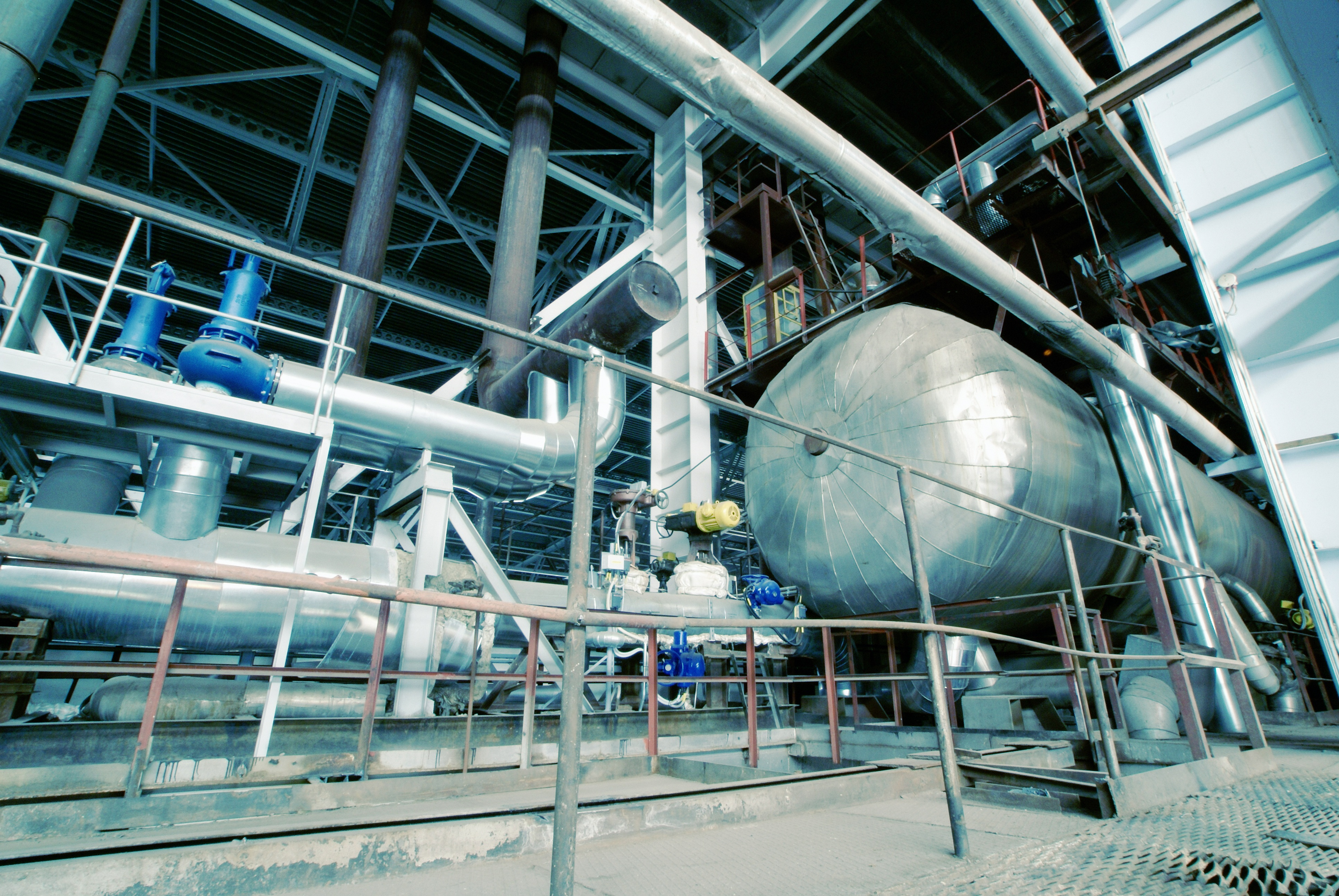
Many industrial sites already produce energy they never use.
It leaves through cooling towers, condensers, hot water loops and process cooling systems. In many factories, this heat is treated as a technical problem that needs to be removed, instead of a financial opportunity that could be recovered.
This is industrial waste heat and under the right conditions, part of that heat can be converted into electricity.
One of the technologies used for this is ORC or Organic Rankine Cycle.
The principle is relatively simple. A traditional power plant usually needs high-temperature steam to generate electricity. ORC works differently. It uses a special working fluid that evaporates at lower temperatures, which makes it possible to produce electricity from lower-grade heat sources that would otherwise be wasted.
That is why ORC can be interesting for industrial sites where useful heat is available, but not at temperatures high enough for traditional power generation.
Typical candidates include factories with stable hot water streams, process liquid loops, cooling systems, condensers, geothermal water or continuous industrial processes in sectors such as chemicals, refineries, steel, pulp and paper, food production, PET, polyols and other energy-intensive operations.
The opportunity becomes especially interesting when the heat source is stable, the operating hours are high and the electricity can be used directly on site.
ORC is not magic. The business case depends on several practical factors: temperature, flow rate, annual operating hours, cooling availability, electricity price, integration cost and whether the system can be connected without disturbing production.
A site with 95°C water, strong flow and continuous operation may be a serious candidate. A site with irregular heat, weak cooling conditions or limited operating hours may not justify the investment.
That is why ORC projects should not start with a sales presentation.
They should start with a feasibility screen.
The first questions are simple, but critical:
What is the heat source temperature?
What is the flow rate?
How many hours per year is the heat available?
Where is the cooling sink?
What is the value of electricity on site?
Can the system be integrated safely into the existing process?
Industrial waste heat is not only an environmental issue, it is lost value.
In the right site, recovering it can reduce electricity purchases, improve energy efficiency, lower emissions and strengthen energy resilience without changing the core production process.
The key is not to assume that every waste heat stream is profitable. The key is to identify which heat streams are strong enough, stable enough and valuable enough to turn into electricity.